Home - MASTER YOURSELF ACADEMY

Our Clients

Why choose us

Creating a difference by empowering individuals

  • 20+ years of experience
  • Master Trainers & Psychologist
  • International Certification
  • Coaching & Mentorship
  • Top Rated
  • Money-back Guarantee on Day 1
  • Free Resources & Meet-Ups
  • Customised Training Solutions
Shape Thumb
Shape Thumb

00 +

Hours of training

00 +

Individuals

00 +

Countries

00 +

Years of training

Upcoming Programs

NLP Foundation Program

A 12-hour, live, interactive training that will help you understand your your Psychology and others.
To know more .

tetsing 11 (Offline)
Date: Dec. 31st, 12:00 AM to 12:00 AM, IST
Language: Malayalam
NLP Practitioner Program

A 50-hour immersive experience to help you reprogram your conscious and unconscious patterns in thought, language and behaviours.

NLP Master Practitioner

An 80-hour in-person experience to understand the essence of NLP and modelling.

Upcoming Workshops / Webinars

  • Date: Dec. 20th to 21st, 12:00 AM to 12:00 AM, IST
  • Workshop
tetsing 1111

cv vcgfvf

  • Workshop
How to Change a Behavior
A 90 minute webinar to understand how to change any behavior in 5 easy steps.

Testimonials

What our delegates say

I really enjoyed the 6 days NLP foundation course at MYA. I am most grateful to Arul sir and Narmadha mam who were fantastic trainers and mentors. This training has helped a lot to learn about myself I am sure that it will definitely help me to live a very happy and peaceful life.

Dhattatreya

Master yourself academy is one of the best places to learn NLP, a way to understand yourself and coach yourself daily in a way that you are happy and productive without extra efforts. 'Any student gets back much more than what they invest' is my personal experience.

Preeti Kalia , Scientist

It was fantastic to learn from Narmada and Arul they are ocean of knowledge and take session in the most interactive way the best part is, its a two way communication in session so all your questions are been answered and they remember minute details. This NLP sessions helped me improve my understanding of who I am and where I am going wrong.

Neha Lodhia

Just last week I completed the 12 hour Foundation Program with Master Yourself Academy and believe me I am so happy to have not delayed enrolling in this any longer. The last week gave me an opportunity to introspect, learn, unlearn and push myself beyond my comfort zone and I think anyone interested in working on themselves should attend this program.

Roshini Gupta

I'm was so happy to attend this NLP. It's open up my mind & create an awareness where I'm lagging. Thanks to the trainers to do this in a fantastic way. Anybody can learn this, it's good for each & everyone life.

Ishwarya Srinivasan, Team Leader

So much passion for improving the life of people. Highly recommend this course for everyone. Gives so much clarity with respect to thought process and how to lead a happy life. Kudos to both narmada ma'am and arul sir

Prathik Kumar , Project Manager

This course has definitely been an eye opener. It equips us with powerful tools which we didn't know we required. This course has really been a boon and I'm eternally grateful for Arul sir and Narmada ma'am for the learning. The interactive classes, topics covered, experiences and experiments and every conversation was a learning.

Thejaswini Prakash, Radio Jockey

It gives me an immense pleasure to say that, this Master Yourself foundation course helped me a lot to weigh my strengths and weaknesses and how to approach the life. This is the training which brings out the best out of you. practicing what did you learn in day today life will change yourself and the way you see the things.

Jeyakumar Srinivasan
Comment images
Shape Thumb
Shape Thumb
Shape Thumb
Shape Images
Blogs

Explore Human Behavior : Expert Articles

gbf
  • Posted By Narmada Rao

xv vc cvccvx

Check
  • Posted By Narmada Rao

e

Helping without rescuing…
  • Posted By Narmada Rao

What I love the most about being a part of this world is that we each want to be useful to someone and help each other out most often.However, helping without rescuing – what is this about and why is it important? Imagine this –Scene 1: A person is drowning – You go and help them and rescue them from drowning.Scene 2: A person is learning to swim – Here, you help them learn. If you rescue them from learning, the odds are that they may not learn the skill of swimming for themselves.Drawing a parallel, when an individual is in a crisis, out of love and concern, we may want to not only help but also rescue the individual. This usually may either create a dependency or take away the learning for the individual; or if the individual is not looking for a solution, you could be rescuing them ahead of time. As a result, you could be held to task for rescuing without being asked. So, what do we do then? Just watch? No!Firstly, it is good to understand where is the person in terms of the problem:–          Do they see it as a challenge (at times, we might perceive it as a challenge but the person going through may not)–          If yes, are they looking for a solution? (This is most important. We cannot help someone find something they are not looking for – else they can give you 100’s of reasons as to why any of your suggestions might not work for their problem)–          If yes, do they want to find the solution ‘on their own’ or are they looking to ‘you’ for some guidance?–          If they are looking to you, are they looking for moral support, information, listening and empathy or anything else?If we are able to gauge the individual on the above, we’d be in a better place to play a role that is required for that situation rather than merely offering what we’d like to offer. Offering anything when it is not required loses its value and can also backfire.Offering your solution to someone is a way of rescuing. Enabling a person to come to their solution is helping.The trouble with rescuing is that it creates dependency. The advantage with helping is that it leaves the person feeling empowered and confident that they can find their own answers. So how do we do that? How can we help without rescuing?One of the ways to do that is by asking open ended questions which facilitate a thought process within them. We could gently nudge them towards solution thinking by framing the questions with that kind of focus – For example – how would you like to go about this situation? What do you think might work? What would you want to do differently? What would you like to have happen? and the like.It is usually observed that people respond well to these kinds of conversations. If you want to pick a needle in a haystack, all you need is a good magnet. Likewise, you can be that magnet by asking neutral, open ended questions (without having a personal agenda) that will facilitate a thought process in the individual. People usually find their own answers when given a positive space and unconditional acceptance. Such revelations are usually liberating because it is their own resource. It may not be as quick as you offering your solution right away, but this is more sustainable in the long run as they find their own solutions and own them too. This way, you are helping them help themselves. You are empowering them!Tags: help, rescue

Reframing – Change the way you think (A powerful NLP technique)
  • Posted By Narmada Rao

It’s been ages since I thought of this incident. But as I woke up this morning, it just flashed in my mind so clearly. I was in 8th or 9th grade. It was a festival in India (Ganesh puja). We woke up in the morning and my father and I went out to get fresh fruits from the market. We had finished buying all the fruits and I offered to carry the bag of fruits. I had always seen my father offering to help people with their bags and baggages and I thought that was so gentlemanly of him. So, I had started doing that at an early age too. He smiled and let me carry the bag. He asked me to hold his hand as we were crossing the road to get to our car. I saw a two-wheeler fast approaching towards us. While my father continued crossing the road, I don’t know at what point did I let go of his hand and just stood frozen. The two-wheeler came and hit me. Due to the impact, I flew and fell on the road with my head hitting the road. After that, I wasn’t aware of what happened.In some time, I felt someone was massaging my feet, some massaging my hands, some mumbling sounds of people, vague sounds. I felt my eyes open, but everything was pitch dark. I couldn’t see. In about a few moments, I heard my father’s voice clearly saying, “Nana, Narmada, can you hear me? Say something nana!” I could hear his panic-stricken voice. And slowly my vision started – it was hazy and blurred at first, but eventually everything became clear and I could see. I saw there were quite a few people surrounding me and I was sitting on some stone. I saw my father looking at me anxiously. I managed to get the words out of my mouth, “I am fine.” The people around suggested my father to take me to a hospital nearby. My father rushed me there, the doctor examined and sent me to the next room for an injection. I overheard the doctor telling my father to observe me for 24 hours and if everything went okay, then there’d be nothing to worry. So, off we went home.As soon as we reached home, my mother was shocked to see me. She worriedly asked what happened. Daddy told her it was a small accident but nothing to worry. I narrated the whole story. As soon as she heard it, she immediately said, “You went to get fruits for the prayer and this is what happened to you. I don’t want to do the prayer now.” My father instantly said, in a very kind and reassuring way, “It is those fruits that saved her today ma. She was carrying that bag on her right side where the bike hit. That’s what prevented her from getting further hurt.” My mother looked into the bag of fruits, a lot of them were squished. She had tears in her eyes. She said, “Yes! These fruits saved her. God is there! We should give thanks to him!” And so the puja (prayer) went on. My parents asked me to rest. Daddy came and lay down next to me. When I woke up, he said, “You were holding on to my hand very tightly nana” and smiled his usual gentle smile. I smiled too. I said I was feeling fine now. And that was that! The technique that my father used, when my mother said she didn’t want to do the prayer, is called reframing in NLP. It means changing the frame or the way in which we look at something by changing its meaning or looking at it in a different context. It’s done very gently and effortlessly and has a massive impact. My father did not challenge my mother or say she was wrong in thinking that way, nor lecture her on why we should pray. He instantly reframed saying, it is that bag of fruits that we got for the prayer that actually saved me. It helps break the unconscious resistance of the other person and offers them a new, more powerful perspective. Reframing gives you the power to choose your response to any situation in life rather than regretting or feeling bad about it. As the old adage goes, ‘you can’t choose what happens to you but you can choose how you respond to it.’The best part is you don’t have to be NLP trained to be able to use this. Most of us use it unconsciously in life, like how my father did. If you consciously choose to do it, imagine how powerful it would be. Let’s explore two important types of reframing. Content and context. Content reframe is when you take the meaning of something and ask – what else could this mean? For example, your friend did not answer your call so you are upset thinking he has no time for you. If you ask yourself, what else could this mean (to arrive at a more positive outlook) – you might think, maybe he’s busy or held up.Context reframing is when you look at the same thing but change the context without changing its meaning. For example, if you think a child is argumentative, you might be frustrated. If you change the context, you can see that they can be a very good lawyer because they can think of alternate points very quickly. So, the two important questions to keep in mind are:What else could this mean (in a more positive way)?In which context could this be useful?If someone says ‘No’ to you, and if you think – ‘they probably have the best intent for me, they are enabling me to help myself’ – this is content reframing. If you think, ‘they are really focused on the task at hand, they know how to prioritize and say no effectively’ – this is context reframing. In the above example of my father, what reframing do you think he used – content or context? Do share your views below. And happy reframing. 🙂Tags: #Neuro Linguistic Programming, NLP

Discovered the opposite of guilty! (Part 2)
  • Posted By Narmada Rao

Imagine this – you are going to be a part of creating history with a Guinness Book of World Record – with more than 4000 children as participants, 20 cameras, another 5000 teachers and parents waiting outside – you head the Organization that’s attempting to create this record. Feel the heat? Amidst all this, you get a call from someone in your organization – saying they missed their flight to get to the venue this morning – they have 10 kids with them who were supposed to be a part of this event. What would you do? How would you respond?Here’s what actually happened. This will blow your mind. When this gentleman got that frantic call, he said, “No worries! When is the next flight?” When the lady shared the details, he said, “Ok, no problem! You come. We’ll take care.” The lady heaved a huge sigh of relief! The gentleman immediately instructed someone from his team to do the needful as soon as they arrive so that they make it on time to participate in the world record. The lady was filled with gratitude and shared this with someone who then shared it with some of us.It would have been the easiest thing to say, “how could you miss the flight”! Even that one sentence would have made the lady feel even more guilty than she was already feeling for what happened. But when she heard this, she least anticipated him to answer his call, and more importantly, respond with such kindness and magnanimity.I have had the pleasure of knowing this wonderful gentleman, my Guru, mentor, coach, and friend – he is Arul Subramaniam, Director of Brainobrain kids academy!When we got to know the story through someone, we were very intrigued and asked him how was he able to be so kind and compassionate even under such a high-pressure environment. He said he visualized the children’s crying faces for missing the flight and missing an opportunity to be a part of a world record. He thought of the lady and how the parents of all those children would blame her and how much she’ll have to spend out of her pocket to rebook the tickets for a different flight for all of them to travel now. He felt if anything, he should try and be a part of the solution and not make her feel even worse. It was important to be kind and understanding. And that’s what he did! Many people who heard this story along with me were stunned by his capacity to be compassionate.Most of us would make pressure an excuse to lose our cool. But for this man, there are no excuses to not be compassionate! And hence, he has an immense capacity to influence people in the most inspiring ways and create paradigm shifts in them. Not because he insists or persists, or criticizes or condemns but because he understands and explains! He doesn’t believe in making people feel guilty. He believes in enabling and empowering. And as a result, there are several thousands of people across the world who know him either through his profession or otherwise who are absolutely grateful to have him in their lives.The positive effect of this behavior is not only on others but on self too. Both, my dance teacher and my Guru have one thing in common – they are very calm and peaceful souls by and large. Their calmness is soothing for others too! They hold such strong positive beliefs about others that they aren’t caught up in a rigmarole of negativity. And the best part is their positivity makes people turn around in ways that the people never imagined themselves.On the other hand, the more we make people feel guilty, the more guilty we feel at the end of their life for having made them feel guilty instead of making them feel loved. And we’ll never have peace of mind constantly judging so many people and feeling bad due to our negative outlook. Hence, it is so important to be gracious rather than grumpy – so that people feel grateful instead of guilty.Wishing that you are filled with peace, graciousness, and gratefulness!I didn’t think there’d be a part 3 when I started writing, but as I wrote this one, a natural question came about – ‘how to deal with people who constantly try to make us feel guilty?’ Coming up, in tomorrow’s blog – stay tuned for more.Tags: #compassion, #motivating, kindness

Discovered the opposite of guilty (part 1)
  • Posted By Narmada Rao

I am guilty of making people feel guilty! Initially, I did not know that we shouldn’t make others feel guilty. Later, some wise being said, ‘never talk to anyone in a way that makes them feel like they owe you an apology’. It made sense. But I did not know what was the opposite of making someone feel guilty. If I wasn’t going to make them feel guilty, what should I make them feel instead? I finally had a eureka moment when I figured what’s the opposite of making someone feel guilty.(Disclaimer – It’s going to be a long read – but it’ll be worth it!)Firstly, why shouldn’t we make people feel guilty? Because guilt is not a great emotion! It’s an un-resourceful emotion. People don’t do better out of guilt. They lose their confidence in themselves. They feel a sense of shame. Once a person feels a sense of shame, the relationship becomes lopsided. One always feels obliged to compensate and the other always feels the necessity to criticize. It suddenly appears like one is bigger and one is smaller in that equation. Hence, it’s an unbalanced relationship. It can’t be steady.A small amount of remorse with an immediate focus on course-correction is helpful. But prolonged or extreme feelings of guilt are damaging. That’s perhaps why we shouldn’t set out to make people feel guilty often. Common ways in which we make people feel guilty are –“Why didn’t you call me? I was waiting for your call!”“You forgot my birthday!”“I made it especially for you with so much effort, but you did not even try it”.“Because of you, my life is like this.”“If you didn’t do this, my life would’ve been so much better by now.”(And so on and so forth. You can add your list of guilt statements)Prolonged feelings of guilt slowly pave the way to feelings of depression, anxiety, and low self-worth, making a person less resourceful and functional. They can even become defensive or aggressive. In order to escape from their guilt, they may try to make you feel guilty too. (Coping mechanisms!)Now that we understand making someone feel guilty has such heavy repercussions, let’s explore a healthy and absolutely outstanding alternative to it!The objective of us stating any of the above statements is to make people realize. Right? But do we want them to realize they were wrong? Or do we want them to understand how they can go right? The thing is, if you harp on proving others wrong, they’ll either admit defeat or wage a war! If you help them understand how they could do better, you are showing them a compelling picture to be drawn towards.  So, how do we do that?By being gracious!Being gracious makes people understand their mistakes and learn quickly without getting into drastic un-resourceful states. And when we are gracious, it makes the other person feel grateful for having us in their life. Sounds better, isn’t it? For example, if someone doesn’t return your call, instead of starting your next conversation on a confrontational mode, how about starting with asking how are they?If someone made a mistake, how about discussing remedial measures with them instead of blaming them?When we do that, instead of feeling guilty, they’ll feel grateful for having someone like you in their lives! There’s no dearth of people who make us feel guilty in life. If you can be that one understanding person, you’ll be their ray of hope.  Now, wait! Those of you with high fears in your head of, “what will happen if they take me for granted”, hang in there. There’s more to this.My dance teacher, Guru Anjana Gupta (Space Academy), is an epitome of graciousness. She said something that was almost unthinkable! I never imagined I’d hear a teacher say that!She said, “Girls, don’t take the tasks that I give you with the same seriousness that I say!” I was stunned when she said that. Usually, people say the opposite. She said, “I am going to offer you all that I have, you take whatever you can, at a pace that is comfortable and joyful for you. I don’t want you to get stressed about it. Some of you might want to take it as a hobby class and not want further work outside class, some of you might be more passionate, so you want to spend time doing homework. Some of you might want to take it up as a profession, so you might be willing to spend a lot more of your time and energy in honing your skills. I am okay with however you wish to pursue it. I respect that. And I want you to enjoy whatever you do. There’s no rule that you have to learn at a certain speed. Learn at a speed that is comfortable for you.” In saying so, she creates a safe space at ‘Space’ for us to learn, ask questions, and explore not just dance but deeper aspects of ourselves and life too!I couldn’t believe a teacher was so unconditional to be able to say that! She was teaching out of passion and didn’t have any judgments about her students. She didn’t set rules that people have to be this way or that way to gain acceptance. Just the fact that she said it made me respect her even more. It made me responsible and wanting to live up to my commitments even more.I figured that’s what makes a great teacher. Being in that role of a teacher myself sometimes, I realize how I may not have been as gracious. How I may have insisted on commitment or learning. But I found her way more powerful. It might not work with everyone. But then again, even the other alternatives don’t work too, right? Nothing works all the time. But something can give you more peace if you wish! You’ll be surrounded by people who absolutely value you and respect you for who you are. Could there be a better gift?And just to hold that wonderful belief that everyone is doing whatever they can do is such a liberating, calming, and relaxing thought. Not to have a yardstick to measure others makes your mind stress free. She pushes us when we need the push. She gives us rest when she sees that we need it too. It’s a great balance. I am not just learning dance but some valuable life lessons. As I say this, it is not just me but the personal story of many of her students who have often mentioned that they would have quit dancing if it wasn’t for ma’am’s constant kind and encouraging words. They find this as one place that helps them let go of all their stress and forget all their problems and just dance with joy! She never makes any of us feel guilty! When some of us take her for granted, she calmly asks, “tell me if you were in my place what would you do? You tell me how do you want me to respond to this. I will do whatever you say.” The way she makes us responsible for our actions is amazing! We automatically fall in line.So, not making a person feel guilty doesn’t mean we accept everything that they throw at us. We do communicate displeasure, but not to shame them or crucify them. But more with an objective to educate and help them understand.I realized that attitude is more inspiring than excellence. If you want people to achieve or be inspired to learn from your excellence, having the right attitude is a must! Attitude is so important that it becomes excellence by itself. A pleasant and understanding person is always inspiring and someone we’d look forward to being around. When our excellence becomes a reason for our arrogance, we lose our capacity to influence people to learn or even cherish our excellence for that matter.When someone is usually kind and compassionate, the one-off case where they lose their cool, we find it easy to understand and empathize.For all the teachers out there, a big shout out! Teachers always teach beyond the subject. Teachers teach essential life skills by the way they conduct themselves!To learn as a student is easy. We take responsibility only for our own learning. But to be a teacher is the biggest task- because learning can never stop when you decide to be on that chair. You have to keep learning and along with your learning is a huge responsibility of enabling others to learn too! The reasons for taking up that role could be anything, but the influence doesn’t change.As humans in everyday life too, we are constantly influencing and impacting people. Instead of proving them guilty, we can show them that they are worthy. Hearts filled with love are any day more beautiful than hearts filled with guilt!I have another mind-blowing story to share – but I’ll reserve that for Part-2 of this blog! That story will show us how to respond in a situation where there’s a 100% chance to hold the other person responsible for going wrong – but how do we set a powerful example of graciousness even under those circumstances – and what’s the effect it has! Stay tuned! And as always, thank you for stopping by and reading. It means a lot!Tags: #compassion, kindness, relationships

Check Out

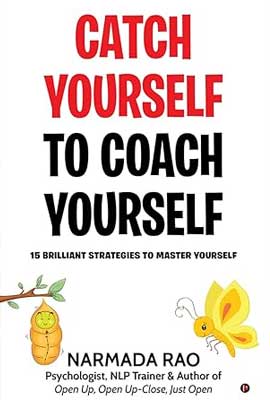
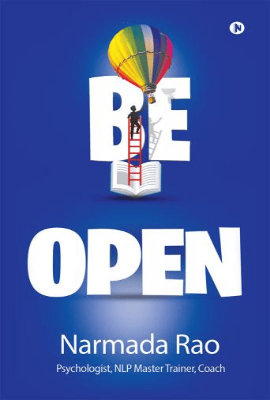
Our Books